Educational cues
A clear framework for learning and growing
Kindness is only genuinely useful when a child knows where the limits are and what is expected of them. At New School, PBIS helps us make those expectations explicit, consistent and understandable in every part of the school.
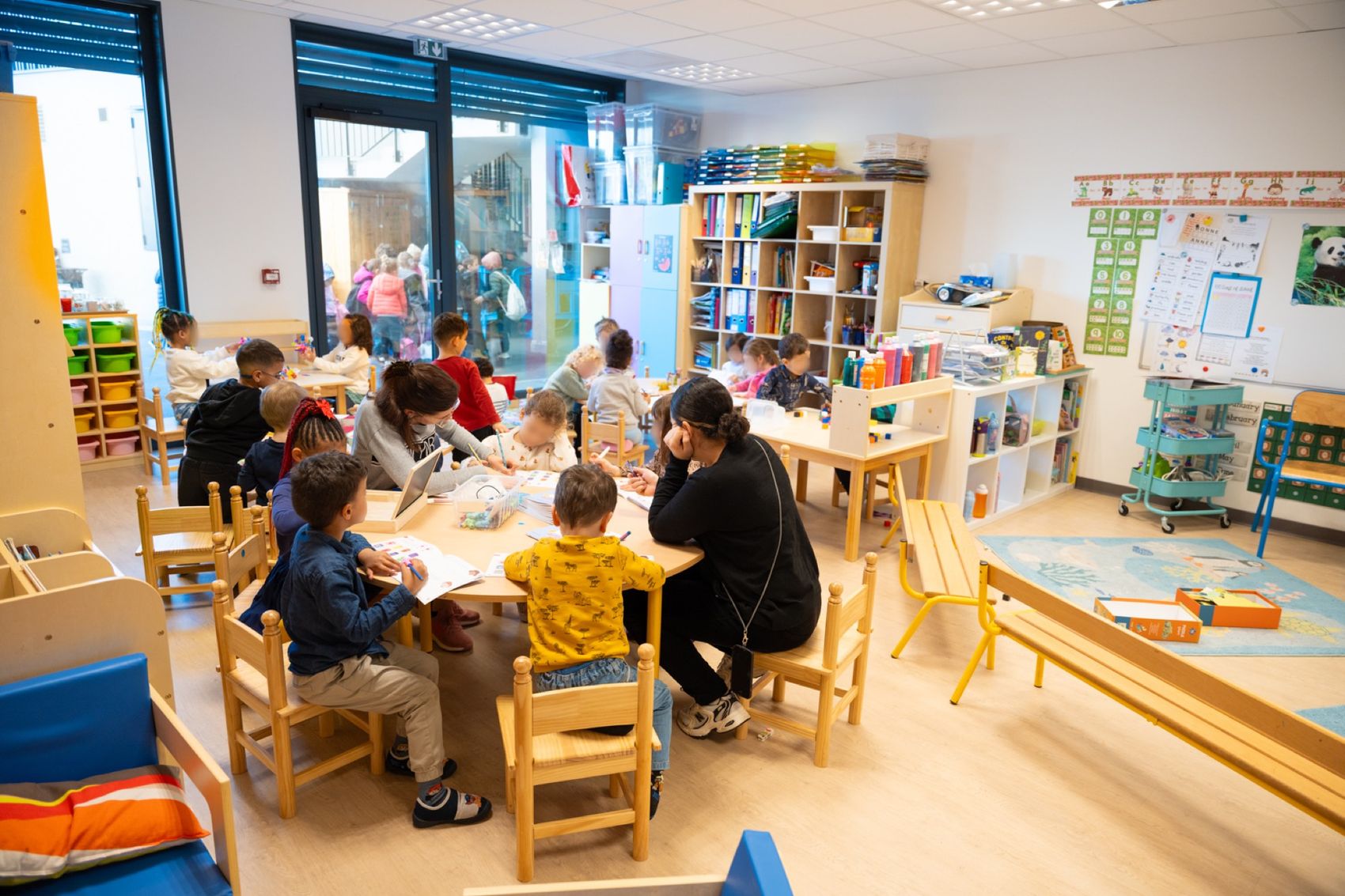
PBIS (Positive Behavioral Interventions and Supports) is an educational framework developed at the University of Oregon and used by thousands of schools across the world.
Its logic is to teach expected behaviours the way we teach academic content: we define, explain, model, repeat and recognise.
At New School, the PBIS framework is not a set of repressive rules. It is a system to learn the social behaviours that support school success. We do not expect a child to guess the codes of collective life — we teach them explicitly. Every space of the school (classroom, hallways, playground, canteen, trips) has simple, visible, repeated expectations, consistently held by adults.
Four values
The expectations, mirrored
For each expectation, what we ask of children and what we also ask of adults.
Respect
For the child
Speaking properly, listening, caring for others and for the equipment
For the adults
Modelling respect, intervening consistently
Learn
For the child
Engaging with the activity, trying, accepting mistakes, finishing one's work
For the adults
Providing a clear framework, differentiating, monitoring progress
Cooperate
For the child
Helping, asking for help, taking part while leaving room for everyone
For the adults
Organising cooperative situations and regulating the group
Be responsible
For the child
Gradually managing one's belongings, choices and emotions
For the adults
Giving cues, encouraging autonomy, setting limits
Learn more about PBIS
An internationally recognised framework
PBIS is used by many schools to make expectations explicit, structure the school climate and support learning. At New School, we adapt it to our context: a bilingual school with a human scale, combining high standards, respect and kindness.
Visit the official PBIS website ↗FAQ
Frequently asked questions about PBIS
No. PBIS does not mean handing out rewards without expectations. It is about teaching and recognising the behaviours that support learning: listening, asking for help correctly, respecting equipment, finishing work, cooperating. Encouragement does not replace expectations — it helps children to internalise them.
No. PBIS does not remove consequences. It first lets us teach the expected behaviours clearly, build a common language between adults and prevent some difficulties. When a behaviour is not acceptable, it is addressed. The goal is not laxness, but understanding, repair and progression.
Yes. It is in fact the opposite of permissiveness: PBIS makes expectations explicit and helps the team to hold them consistently, over time.
Families support the school's rules. They do not replace the educational team, but their consistency with the school helps the child understand that expectations are stable. When the situation requires it, a conversation with the family helps adults align around the child.
Pour aller plus loin