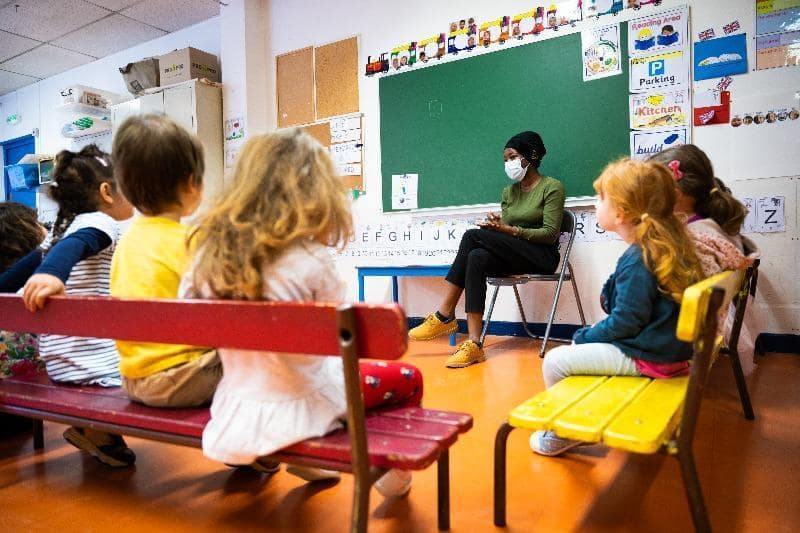
Every parent is looking for a preschool with a caring setting that will allow their child to thrive in safety. As soon as a child reaches age 3 - the age at which schooling becomes compulsory - parents will need to choose a preschool. So how do you choose a preschool?
To make this choice, you first need to identify the different types of schools and define selection criteria.
The different types of preschool
The first distinction between types of schools is between state preschools and private preschools.
State schools
State schools are under the State's authority and follow the national curriculum. They are free, secular, and accessible for a large number of children, who will have no difficulty joining a state school.
For private preschools, there are two forms: under contract and outside contract with the State.
Private schools under contract
Private schools under contract with the State follow the national curriculum and, because they are fee-paying, they guarantee a high-quality educational setting with quality premises and teaching equipment. Private schools also offer a wider range of school and extracurricular activities.
Private schools outside contract
Finally, private schools outside contract with the State do not depend on the national education ministry and often follow their own curriculum. Although more expensive because they are not State-funded, private schools outside contract are subject to checks that guarantee the quality and level of teaching.
Then there are bilingual schools. Some schools, whether state or private, may offer bilingual teaching. In this type of school, teaching is delivered in two languages and allows the child to learn a second language from the youngest age. This teaching is more or less immersive depending on the school. It fosters open-mindedness and builds the child's curiosity through the discovery of another culture, by speaking and hearing another language while keeping up the learning of the mother tongue.
The main criteria to consider (personal) to help your child thrive
Child wellbeing: every child should be able to thrive and make the most of the school setting to grow and socialise with other children.
Child safety: in the school, whether during breaks, lunches, lessons, or at the end of the school day.
Quality of teaching: so that the children can continue their school journey in the best conditions, with all the keys to move on to the next levels.
The teaching team: which must be caring and trained to guide and support all pupils in the best possible way.
The cost of the school: which guarantees quality equipment and varied activities to allow pupils to discover hobbies and other cultural activities.
Proximity to home or the parents' workplace.
Suitable facilities, not only to welcome all the children but also to allow them to take part in activities within the school.
The educational project must be tailored to each child, as it is essential to take into account the particularities of every child so they can thrive in their learning.