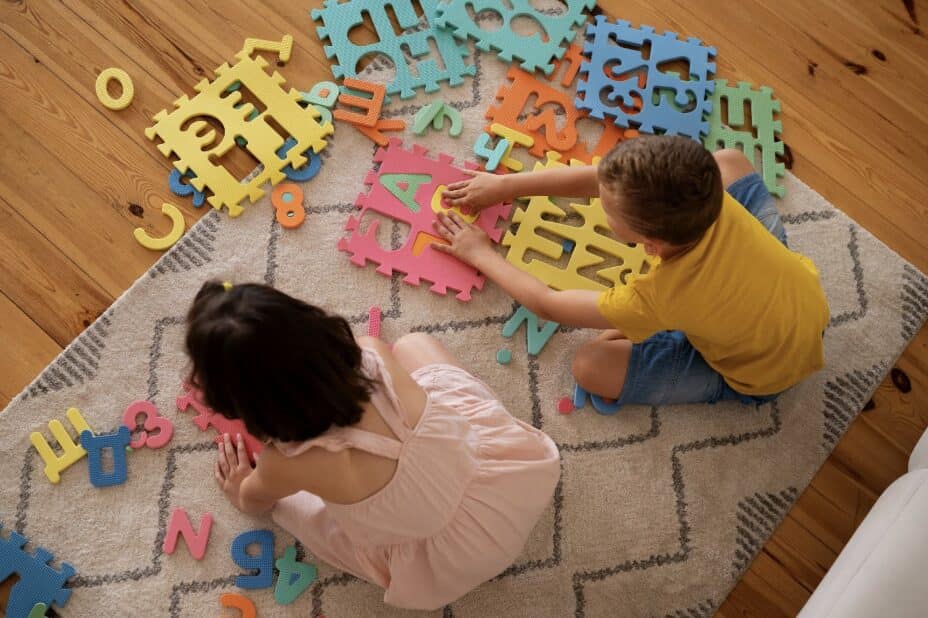
Holidays often mean rest and relaxation, but they can also become a precious opportunity to maintain and strengthen language skills in both languages - especially when families speak two. For children enrolled in bilingual schools, this time of year is a great moment to help them keep up their level!
Creating an immersive environment
One of the most effective ways to keep up regular practice is to create an immersive environment at home. It's not just about practising a language every day, but integrating it into daily activities in a natural way. For instance, parents can assign certain activities to a specific language:
In the morning, speak English for everyday tasks like breakfast or tidying up.
Use French for leisure activities like reading books, board games, or watching films and cartoons in French.
Playful activities: games and creations
Children learn best when they're having fun. Use the holidays to organise activities where English appears in a playful way. Here are a few ideas:
Bilingual treasure hunts: create clues in French and English for a hunt around the house or garden.
Role-play games: encourage children to play roles where they use a specific language for each character.
Creative workshops: during hands-on activities, ask your child to follow instructions in English or French (for example, building an object or cooking).
Conversations with friends and family
If possible, use the holidays to set up informal language exchanges. This could be a video call with a friend or family member who speaks one of the languages, or even a stay with a family that speaks one of them. These real-life interactions give children a chance to practise their oral skills while staying in a natural setting.
Reading books in English
Reading remains one of the most effective ways to keep both languages going. Choosing bilingual books, where each page presents text in French and English, is ideal. It helps the child become familiar with words and sentences in both languages while having visual support to aid comprehension.
Setting up a flexible but regular routine
Finally, even during the holidays, it is important to establish a small routine that allows both languages to be practised without overload. Just a few minutes a day are enough to prevent the child from losing their linguistic bearings. This can include:
Reading an English book each evening before bedtime.
Listening to a song or watching an educational video each morning.
Dedicating 15 to 20 minutes a day to a language game (word game, puzzle, etc.).
Conclusion: making the holidays a moment of pressure-free learning
The holidays are a great opportunity to maintain language learning while letting the child relax. The key is not to put on pressure, but rather to make learning fun and natural!